I am fortunate to have many friends that helped me and guided me in this journey called life. Jeanne was my second mom, or as my mother called her my Seattle Mom.
When I first met Jeanne, in the late 1980s, she spoke about her time “in camp” as a child and some of the very common happy child memories she had with her brothers and friends. Being a kid from Spanish Harlem and the Bronx, I was impressed and slightly jealous that this older woman, born and raised in Seattle, had the benefit of going to “summer” camp and here was yet another example of how bad my childhood was in comparison.
Then the opportunity of understanding my ignorance came to bear. Jeanne was referring to her experience in Japanese American Interment camps during the second World War. I called my siblings and friends asking them if I had missed class the day this topic was discussed this in school (I only had missed school for one week and that was in June 1969. Other than that I had perfect attendance from kindergarten through high school.). To my relief and embarrassment, they too had not heard about internment. I refer to this as the East Coast-West Coast divide of World War II. For geographic and societal concerns, the east coast was concerned about Germany and the west coast was focused on Japan, especially after the bombing of Pearl Harbor.
The reason Jeanne had started talking about camp, was a discussion of the reparations and the redress movement that was reaching a milestone with the Civil Liberties Act of 1988. Both Jeanne and her husband were personally not in favor of the redress money that was later distributed in 1990. “We were at war. Our country did what they had to do.” Jeanne would say. I learned of her family’s good fortune for their neighbor purchasing their home for $1 right before she, her families and many others of Japanese descent were bused to Puyallup to Camp Harmony and how that family kept their home safe for their return in 1945. There were also painful stories of the ignorance of hatred and discrimination of her, her family and friends in the Japanese community as well as many of courage, true friendship and perseverance.
I celebrated Jeanne’s birthday a few weeks ago with her son. She would have been 78. Her birthday inspired me to do some research that I am sharing with her nieces and nephews. I found interment records on Ancestry.com’s
World War II Japanese-American Internment Camp Documents, 1942-1946.
Looking through the records, I was struck by the fact that they did not have family information like that of the US Census. These records are very much like prison records and how the system was deciding the future employment of the individual (see Potential Occupations in the sample Internment record below)
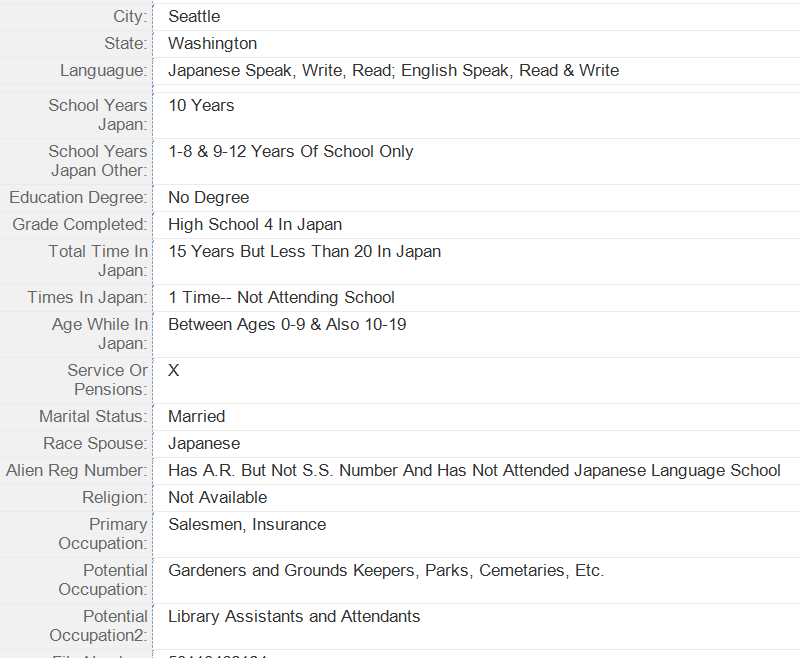
I found a number of Japan born residents, survivors of the American Internment camps who became American citizens in the mid-1950s. I assume the Immigration and Nationality Act of 1952 helped facilitate the naturalization process for them.
Jeanne and my mom spent a lot of time together in New York and Seattle on visits. They loved discussing gardening, cooking and “Sylvia Stories”.
Gaman is the Japanese term for perseverance. Both of my moms are my role models of Gaman, and I strive everyday to do them proud.
Discover more from Looking For My Roots
Subscribe to get the latest posts sent to your email.

Leave a Reply